order #01 · Meeting English
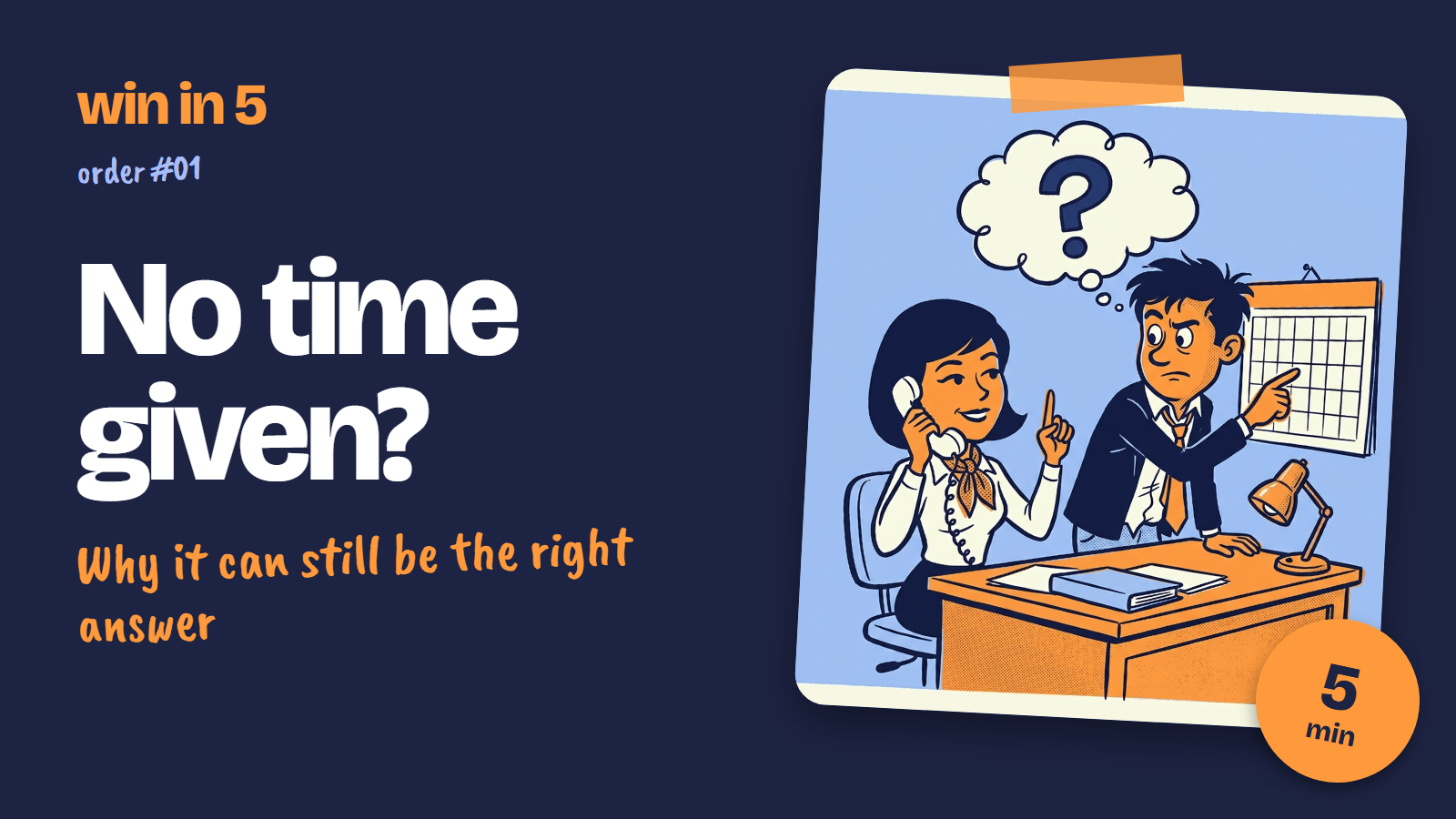
A client wants to move Thursday's meeting. Ryan asks about timing twice, and Megan never gives him a time. Every answer still makes perfect sense, and that's exactly how the TOEIC works.
Part 2 = Question–Response: hear a question, pick the best reply.
The short answer
A “when” question doesn't always need a time in the answer.
On the TOEIC, “They haven't said yet” or “As soon as the new date is confirmed” can be the right answer.
First, listen in
Megan is a project manager. It's Monday morning, and a client has just asked to move Thursday's meeting. She stops by Ryan's desk.
Today’s menu
5 phrases, in the order you hear them.
push back
To move something to a later time.
tipThe opposite, moving something earlier, is "move up" or "bring forward."
They haven't said yet.
No day, no hour. The time simply isn't decided.
hold it until we hear back
Keep the room booked up to the moment they reply.
tipThe time is an event, not a clock time.
as soon as
The answer to "when" is an event.
I've already sent them a message.
Not yes or no, but a fact that shows it's already handled.
today’s cheat sheet
Say it another way
win in 5 · #01
What you hear in the conversation, and how it can show up on the TOEIC.
could be the right answerbe carefulNumbers match the phrases above.
1push back
2They haven't said yet.
QOn the test, question: Did they say when?
AAnswer: They haven't said yet.
No day, no hour. It still answers the question.
4as soon as
QOn the test, question: When do you need the updated slides?
AAnswer: As soon as the new date is confirmed.
The answer is an event, not a clock time.
5I've already sent them a message.
QOn the test, question: Should I let the design team know?
AAnswer: I've already sent them a message.
Not yes or no, but a fact. Indirect answers like this are common in Part 2.
watch out
When you hear “when,” your brain hunts for a time. Wrong options often give a place, a “yes,” or a word that sounds like the question.
toeic.mjenglishclass.com
The big lesson
When you hear "when," don't hunt for a clock. Look for the answer that actually makes sense.
Now, listen again
The conversation plays one more time. Tap each phrase when you hear it. 0 / 5
Order complete · nice ears
Your turn
One TOEIC-style question. Tap your answer.
“When do you need the updated slides?”
Read the full transcript
Welcome to Win in 5 Minutes English. I'm Jason. We just heard Ryan ask about timing twice, and Megan never gave him a time. Not once. But every answer made perfect sense. Today we're finding out why the best answer to a "when" question doesn't always include a time. Because on the TOEIC, that can be the right answer.
First, look at the phrase "push back." "They need to push back Thursday's meeting." To push something back means to move it to a later time. On the test, you'll hear the same idea as "postpone," "reschedule," or "delay." And the opposite, moving something earlier, is "move up" or "bring forward."
Now, Ryan asks, "Did they say when?" And Megan says, "They haven't said yet." No day, no hour. It simply tells Ryan the time isn't decided. On the TOEIC, answers like these are common correct answers. I haven't heard yet. It hasn't been decided. Let me check.
Next: "Let's hold it until we hear back." Here, hold it means keep the room booked. And "until we hear back" means we keep doing that up to the moment they reply. Notice she gives an event, not a clock time.
Same thing here: "When do you need the updated slides?" "As soon as the new date is confirmed." Again, the answer is an event. As soon as the date is confirmed. Not until Friday. Right after the client calls. These are all real answers to a "when" question.
And one more. Ryan asks, "Should I let the design team know?" Megan says, "I've already sent them a message." She doesn't say yes or no. She gives a fact that shows it's already handled. Indirect responses like that are common in Part 2.
So here's the trap. When you hear "when," your brain starts hunting for a time. The test writers know that. They often give you a wrong option with a place, or a "yes," or a word that sounds like the question.
Now, I want you to listen to that conversation one more time. This time, notice how Megan answers every question about timing without ever giving a time.
Welcome back. Did you catch them all? Megan never gave a single time, and every answer still worked. That's exactly the kind of response you'll hear on the TOEIC. Remember, you'll find the full list of today's key phrases and notes in the link below.
That's it for today's Win in 5 Minutes English. Remember, five minutes a day is all you need to win at work, win the TOEIC, and win over your colleagues. Stay professional, everyone. Goodbye.

Comments