order #11 · Meeting English
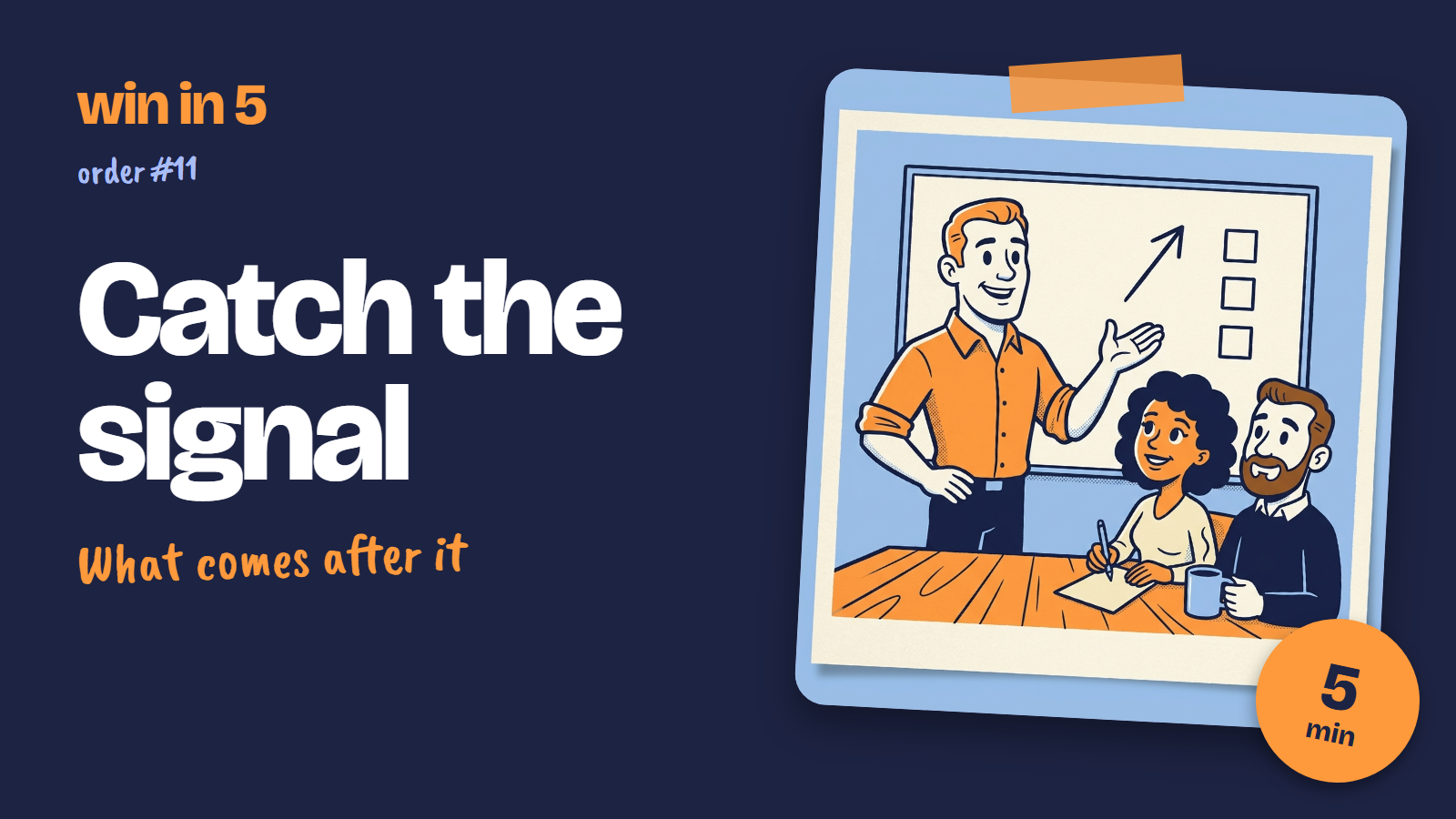
Michael gives his team a quick project update. He uses four little signal phrases, and each one points to something worth catching.
Part 4 = Talks: answer questions about a short announcement or message.
The short answer
In a TOEIC Part 4 talk, the answer often comes right after a signal phrase like “Let me walk you through” or “The main thing I need.”
Catch the signal, then catch what comes after it.
First, listen in
Michael is leading a team that's building a new booking app. At the Thursday team meeting, he gives everyone a quick update.
today’s menu
Say it another way
5 phrases, in the order you hear them.
walk you through
MichaelLet me walk you through where we are with the new booking app.
Explain something step by step. What comes after it usually tells you the topic.
On the test
QOn the test, question: What is the speaker mainly talking about?
AAnswer: The progress of a project.
The topic comes right after “Let me walk you through.”
about seventy-five percent
MichaelSo far, we've finished about seventy-five percent of the design work, and testing starts next Monday.
Numbers love to change shape on the TOEIC.
The test may say
slightly ahead of schedule
MichaelThe good news is that we're slightly ahead of schedule.
A little earlier than planned.
The test may say
Trap
the budget is tight
MichaelThe not-so-good news is that the budget is tight, so we can't add any new features right now.
There isn't much money.
The test may say
The main thing I need from all of you
MichaelThe main thing I need from all of you is feedback on the test version by Friday.
It works just like “please”: the request comes right after it.
On the test
QOn the test, question: What are the listeners asked to do?
AAnswer: Give feedback on a test version.
Catch what comes right after “The main thing I need.”
watch out
Wrong answers often take a detail you heard, like “testing starts next Monday,” and turn it into something the speaker never asked for.
Cheat sheetwin in 5 · #11
2about seventy-five percentthree quarters / most of the design work
3slightly ahead of scheduleearlier than planned
4the budget is tighta limited budget
The big lesson
In a talk, listen for the signal, then catch what comes right after it.
Now, listen again
The conversation plays one more time. Tap each phrase when you hear it. 0 / 5
Order complete · nice ears
Your turn
One TOEIC-style question. Tap your answer.
“What are the listeners asked to do?”
Try it today
“Let me walk you through where we are.”
Use it at the start of your next update.
Read the full transcript
Welcome to Win in 5 Minutes English. I'm Jason. In a project meeting, one person talks, and everyone else tries to catch what matters. The TOEIC tests this too, in the part of the test where you hear one speaker give a short talk and answer three questions. That's Part 4. And Michael just gave us a perfect example.
Here's the secret: good speakers tell you what's coming. They use little signal phrases, and the important part comes right after them.
The first one: "Let me walk you through where we are with the new booking app." To walk someone through something means to explain it step by step. And what comes after "Let me walk you through" usually tells you the topic. So if the question is, "What is the speaker mainly talking about?" the answer might be, "The progress of a project."
Next: "So far, we've finished about seventy-five percent of the design work." Numbers love to change shape on the TOEIC. Seventy-five percent could become "three quarters" or "most of the design work."
Then two more signals: "The good news is" and "The not-so-good news is." The good news: "We're slightly ahead of schedule." Slightly means a little, and ahead of schedule means earlier than planned. Be careful: an answer that says "behind schedule" uses the same word, schedule, but means the opposite. The not-so-good news: "The budget is tight." Tight here means there isn't much money. On the test, that could be "a limited budget."
And the last signal: "The main thing I need from all of you is feedback on the test version by Friday." "The main thing I need" works just like "please." The request comes right after it. So for "What are the listeners asked to do?" the answer is, "Give feedback on a test version."
Now, the trap. Wrong answers often take a detail you heard, like "testing starts next Monday," and turn it into something the speaker never asked for. Always check: does it answer the question?
So here's today's big lesson: in a talk, listen for the signal, then catch what comes right after it.
Ready? Here's Michael one more time. Count the signal phrases as you hear them.
How many signals did you count? Let me walk you through, the good news is, the not-so-good news is, and the main thing I need. Four signals, and each one pointed to something worth catching. Today's phrases: walk you through, about seventy-five percent, ahead of schedule, and a tight budget. Here's one to try today: the next time you give an update, start with, "Let me walk you through where we are." All four signals are waiting under "Say it another way" on today's page, along with one TOEIC question. Just tap the link below.
Remember, five minutes a day is all you need to win at work, win the TOEIC, and win over your colleagues. Good luck with your next project update. You've got this!


Comments