order #18 · Office Daily English
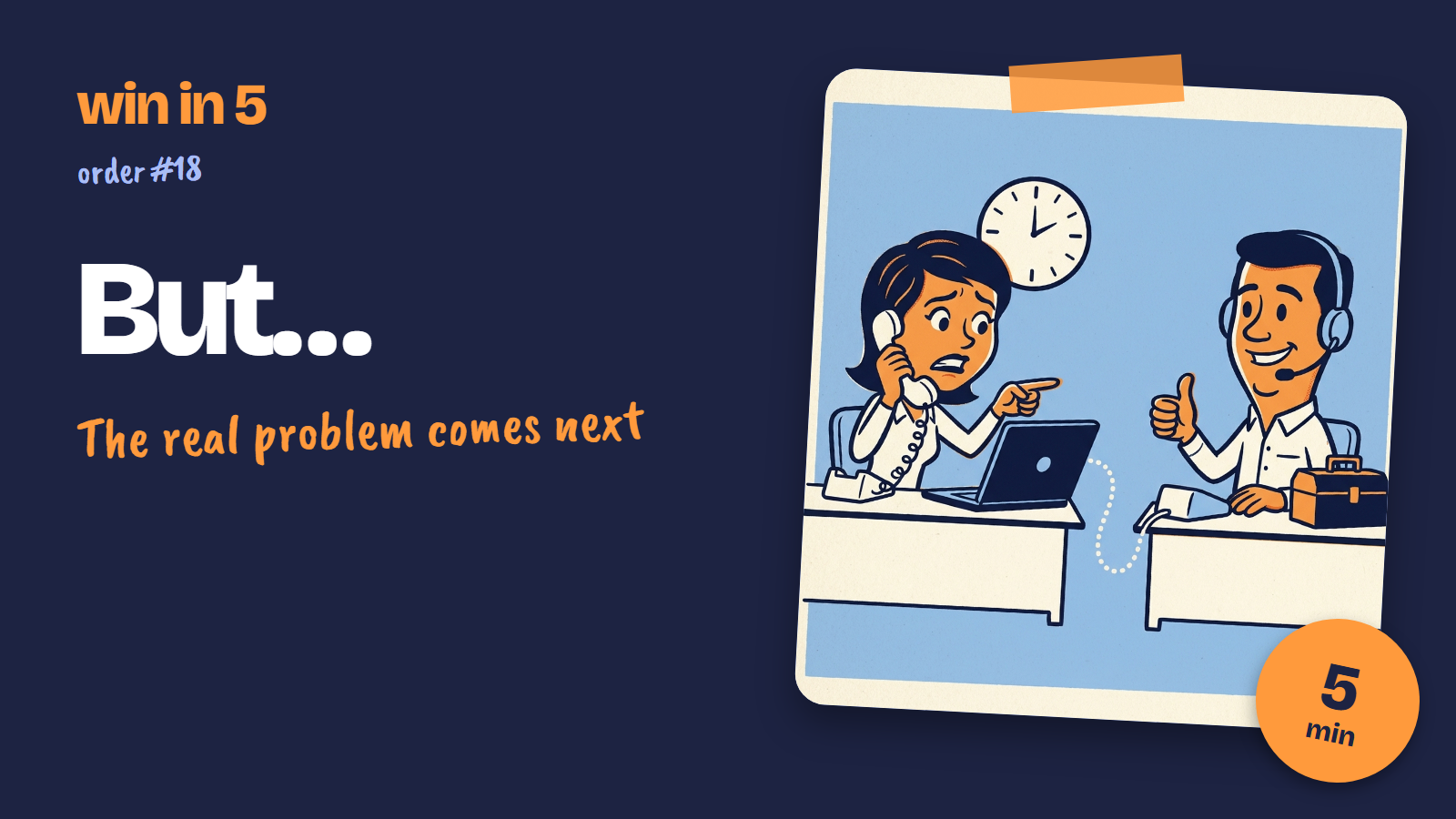
Rachel's computer froze, and she has a report due at noon. She calls IT, and the real problem comes right after one little word: but.
Part 3 = Conversations: answer questions about a short conversation.
The short answer
On the TOEIC, when a question asks “What is the woman's problem?”, the answer often comes right after “but” or “unfortunately.”
Wrong answers often reuse words you heard, like “turn on” or “password,” but with the wrong facts.
First, listen in
Rachel works in accounting. Her computer froze this morning, and she has a report due soon. She calls the IT help desk, and Daniel picks up.
today’s menu
Say it another way
6 phrases, in the order you hear them.
froze
RachelHi Daniel, it's Rachel from accounting. My computer froze this morning, so I restarted it.
It stopped working. The screen is stuck, and nothing moves.
The test may say
won't let me log in
RachelIt turned back on, but now it won't let me log in. It says my password is wrong.
It doesn't allow her to sign in. This is the real problem, right after “but.”
The test may say
Trap
On the test
QOn the test, question: What is the woman's problem?
AAnswer: She can't access her computer.
Listen to what comes after “but.”
due at noon
RachelNo, I didn't. And unfortunately, I have a client report due at noon.
The deadline is twelve o'clock.
The test may say
On the test
QOn the test, question: What is the woman concerned about?
AAnswer: A deadline.
“Unfortunately” means bad news is coming.
remotely
DanielGot it. I'll reset your password remotely. Give me two minutes.
From a different place. He can do it without going to her desk.
On the test
QOn the test, question: What will the man do next?
AAnswer: Reset a password.
“I'll…” often tells you what the man will do next.
hang on
DanielYes, please hang on. I'm starting the reset now.
Wait a moment. “Stay on the line” means don't hang up.
The test may say
You're a lifesaver
RachelGreat. You're a lifesaver.
A warm way to say: thank you, you really helped me.
watch out
Wrong answers often reuse words you heard. “Her computer won't turn on” uses “turn on,” but it did turn back on. “She forgot her password” uses “password,” but she never said that.
Cheat sheetwin in 5 · #18
1frozeHer computer stopped responding. / It stopped working.
2won't let me log inShe can't access her computer. / She's locked out of her account.
3due at noonShe's concerned about a deadline.
5hang onHe asks her to hold.
The big lesson
When the question asks about a problem, wait for “but” or “unfortunately.” The answer often comes right after.
Now, listen again
The conversation plays one more time. Tap each phrase when you hear it. 0 / 6
Order complete · nice ears
Your turn
One TOEIC-style question. Tap your answer.
“What is the woman's problem?”
Try it today
“I sent the file, but the client can't open it.”
When you explain a problem at work, say what happened first, then the real problem after “but.”
Read the full transcript
Welcome to Win in 5 Minutes English. I'm Jason. A frozen computer and a deadline at noon. We've all been there. Rachel called the IT help desk, and her call is a great way to practice a question the TOEIC asks a lot: what is the woman's problem? There's a part of the test where you hear a short conversation and then answer three questions about it. That's Part 3. And here's the thing: the problem is often not the first thing you hear. It often comes after words like but or unfortunately.
Let's start with Rachel's first line: "My computer froze this morning, so I restarted it." Froze means it stopped working. The screen is stuck, and nothing moves. On the test, you might hear "her computer stopped responding," or "it stopped working."
Now, here's the important part. Daniel asks if it's working now, and Rachel says, "It turned back on, but now it won't let me log in." Listen to what comes after the word but. That's the real problem. Won't let me log in means it doesn't allow her to sign in. So if the question is "What is the woman's problem?" the answer might be "She can't access her computer," or "She's locked out of her account."
Next, Rachel says, "And unfortunately, I have a client report due at noon." Unfortunately is another signal. Bad news is coming. Due at noon means the deadline is twelve o'clock. So if the question is "What is the woman concerned about?" the answer could be "a deadline."
Then Daniel says, "I'll reset your password remotely." Remotely means from a different place. He can do it without going to her desk. And when you hear I'll, that's often what the man will do next. So, "What will the man do next?" Reset a password.
Rachel asks, "Should I stay on the line?" and Daniel says, "Yes, please hang on." Hang on means wait a moment. Stay on the line means don't hang up. Both mean she should wait with him. On the test, you might see a choice like "He asks her to hold."
And Rachel's last line: "You're a lifesaver." That's a warm way to say, thank you, you really helped me.
So here's the trap. Wrong answers often reuse words you heard. "Her computer won't turn on" uses turn on, but her computer did turn back on. "She forgot her password" uses password, but she never said she forgot it. The system just says it's wrong.
And here's today's big lesson: when the question asks about a problem, wait for but or unfortunately. The answer often comes right after.
Ready for round two? Here's Rachel's call again. This time, every time you hear but or unfortunately, listen closely to what comes next.
"It turned back on, but now it won't let me log in." Did you catch the word but that time? That one little word is where the real problem starts. Today's phrases: froze, won't let me log in, due at noon, remotely, hang on, and you're a lifesaver. Here's one to try today: when you explain a problem at work, say what happened first, then the real problem after but. Like, "I sent the file, but the client can't open it." There's one TOEIC question about Rachel's call on today's page, plus "Say it another way." The link is below.
Remember, five minutes a day is all you need to win at work, win the TOEIC, and win over your colleagues. And if your computer freezes today, stay calm, call IT, and maybe bring them a coffee. Talk soon!


Comments